
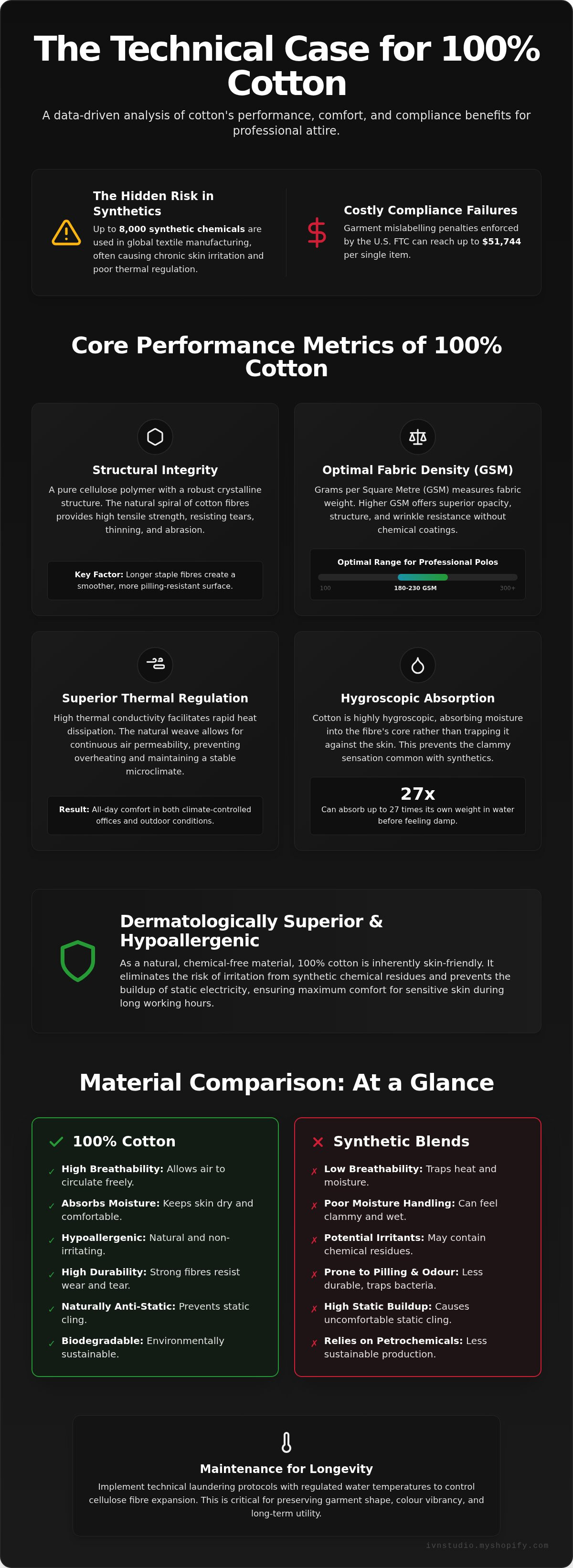
Did you know that the U.S. Federal Trade Commission now enforces penalties of up to $51,744 per item for garment labelling violations? For the modern professional, understanding the technical benefits of 100% cotton is essential to ensure both regulatory compliance and personal comfort. Many office-based workers suffer from chronic skin irritation and poor thermal regulation caused by the 8,000 synthetic chemicals often used in global textile manufacturing. You likely recognise the frustration of rapid garment degradation and the discomfort of non-breathable fabrics during long shifts.
This article provides a comprehensive technical analysis of 100% cotton properties, performance metrics, and strict maintenance protocols for professional wardrobes. We offer a data-driven look at cellulose structural integrity, hypoallergenic verification, and moisture-wicking efficiency. You'll gain insights into the latest ISO 9348:2026 standards for contamination resistance and the NIST RGTM 10279 testing materials used to validate fibre composition. This guide focuses on material-first quality to help you optimise your professional attire for maximum longevity and functional utility.
Key Takeaways
- Technical identification of cellulose-based natural polymer structural integrity and staple length correlation with fabric surface smoothness.
- Analysis of thermal conductivity parameters and air permeability metrics for efficient heat dissipation in professional environments.
- Verification of the dermatological benefits of 100% cotton through the elimination of synthetic chemical irritants and static electricity buildup.
- Implementation of technical laundering protocols and water temperature regulation for cellulose fibre expansion control and garment longevity.
- Assessment of long-sleeved polo technical specifications including ribbed collar construction and 100% cotton composition for smart-casual utility.
Structural Composition and Technical Properties of 100% Cotton
The fundamental classification of 100% Cotton as a pure cellulose-based natural polymer defines its mechanical performance in professional environments. Unlike synthetic alternatives, the molecular arrangement of cotton consists of long-chain glucose molecules forming a robust crystalline structure. This structural orientation directly influences the benefits of 100% cotton regarding durability and surface texture. Staple length, representing the individual fibre dimension, serves as a primary indicator of fabric smoothness. Longer fibres result in fewer protruding ends, significantly reducing the risk of pilling and surface abrasion during regular use.
Technical differentiation between pure cotton and "cotton-rich" synthetic blends is critical for professional procurement. Whilst blends incorporate polyester or elastane to reduce production costs, they sacrifice the inherent breathability and chemical stability of the natural polymer. This often leads to heat entrapment, static buildup, and accelerated fibre degradation. Pure cotton remains the industry standard for functional longevity and material-first quality.
Cellulose Integrity and Fabric Strength
The unique spiral structure of cotton fibres, characterised by natural convolutions, enhances the material's tensile strength and elasticity. This microscopic geometry allows the fabric to withstand repeated mechanical stress without structural failure. Fibre purity acts as a safeguard against fabric thinning, a common failure point in lower-quality professional garments. High-density cellulose ensures a superior drape, maintaining a crisp, professional silhouette throughout extended periods of wear. This structural reliability is essential for maintaining a sharp appearance in smart-casual and formal office settings where garment integrity reflects professional standards.
Understanding Fabric Weight: The GSM Metric
Grams per Square Metre (GSM) provides a quantitative measure of fabric density and weight. In the context of professional apparel production, a higher GSM correlates with increased opacity and structural resistance. Synthetic fabrics often rely on chemical coatings for opacity, whereas pure cotton achieves this through physical fibre density. For professional long-sleeved polo shirts, an optimal weight typically falls between 180 and 230 GSM. This range ensures the garment remains substantial enough to resist wrinkling whilst providing necessary thermal insulation.
The benefits of 100% cotton in this weight class include consistent shape retention and a professional aesthetic that outlasts thinner alternatives. Choosing the correct GSM prevents the garment from becoming translucent or losing its form after multiple laundering cycles. This metric is a vital technical specification for any professional wardrobe prioritising material-first quality and long-term utility.
Thermal Regulation and Breathability Performance Metrics
The mechanism of air permeability in natural cotton weaves depends on the interstitial spaces within the woven structure. These voids allow for continuous atmospheric exchange. One of the primary benefits of 100% cotton is its high thermal conductivity. This property facilitates rapid heat dissipation in high-temperature environments. Unlike synthetic polymers that act as thermal insulators, cotton fibres move heat away from the skin surface. This ensures a stable microclimate for the wearer during transitions between climate-controlled office environments and outdoor conditions. The absence of synthetic coatings, often tested via ISO 9348:2026 for contamination resistance, ensures that the natural pore structure remains unobstructed for maximum airflow.
Moisture management in pure cotton differs fundamentally from synthetic moisture-wicking technologies. Cotton fibres possess high hygroscopicity. They absorb moisture into the internal lumen of the fibre. This prevents the clammy sensation associated with polyester blends. A 100% cotton garment can absorb up to 27 times its weight in water before feeling damp. This internal sequestration of moisture through high-density cellulose lumen absorption maintains dermal dryness and comfort during high-stress professional activities. This capacity for absorption followed by slow, controlled evaporation prevents the rapid cooling effect often felt with synthetics, which can lead to post-exertion chills in air-conditioned spaces.
Vapour Transmission and Sweat Management
Pure cotton facilitates high vapour transmission rates. Skin moisture evaporates through the fabric rather than remaining trapped against the epidermis. This superior ventilation inhibits the growth of odour-causing bacteria. Synthetic fabrics, particularly polyester, exhibit low vapour permeability. This leads to sweat accumulation and chemical reactions with synthetic dyes. Professionals requiring consistent comfort throughout long shifts should view the 100% cotton long-sleeved polo for its functional sweat management. The lack of synthetic chemical irritants, amongst the 8,000 chemicals used in global textile production, further enhances this skin-to-fabric interface.
Insulation Properties in Transitional Seasons
The utility of long-sleeved cotton polos in autumn and spring relies on natural heat retention. Cotton fibres aren't perfectly smooth; they have natural convolutions that trap small pockets of air. This dead air space provides effective insulation against cooler temperatures. In transitional seasons, this material-first approach offers a versatile solution. Cotton functions efficiently as a base or mid-layer. It provides warmth without the risk of overheating common in non-breathable synthetic knitwear. The structural integrity of the fibre ensures these air pockets remain effective even after multiple laundering cycles, unlike synthetic lofts that often collapse and lose their insulating properties over time.
Dermatological Compatibility and Hypoallergenic Attributes
The pH-neutral nature of natural cellulose fibres ensures high dermatological compatibility with human skin. Unlike synthetic polymers, which often possess acidic or alkaline residues from chemical synthesis, pure cotton maintains a neutral interface. The elimination of static electricity buildup common in synthetic fabrics provides a significant functional advantage. Synthetic materials frequently generate triboelectric charges, leading to fabric clinging and the attraction of airborne particulate matter. One of the primary benefits of 100% cotton is its low electrical conductivity, which prevents these issues and reduces skin irritation. This property is particularly vital for professionals working in environments with sensitive electronic equipment or high dust concentrations.
For individuals with atopic dermatitis or hyper-sensitive skin, the choice of apparel material is a technical necessity rather than a preference. Global textile manufacturing utilizes over 8,000 synthetic chemicals, many of which remain as residues in finished garments. Pure cotton serves as a hypoallergenic barrier, reducing the risk of contact dermatitis. Research indicates that formaldehyde in clothing with direct skin contact is limited to 75 parts per million (ppm) in certain jurisdictions to prevent adverse reactions. Choosing 100% cotton garments minimizes exposure to the resins and fixing agents often found in synthetic-rich "non-iron" textiles.
Non-Irritant Fibre Surface Analysis
The microscopic smoothness of combed cotton versus irregular synthetic filaments directly affects skin health. The combing process removes short, coarse fibres, leaving only the long, uniform staples. This results in a fabric surface that minimizes friction-induced skin redness during long-term wear. Synthetic fibres often feature irregular cross-sections and abrasive filaments that can cause micro-abrasions on the epidermis. Pure cotton remains the industry standard for professional base-layer apparel due to this physical surface consistency. It provides a non-abrasive texture that supports skin integrity throughout extended twelve-hour shifts.
Chemical Purity and Finishing Standards
The risks associated with formaldehyde and synthetic resins in "non-iron" blends represent a major concern for professional wardrobe optimisation. These chemical finishes are applied to synthetic-cotton blends to mimic the natural crispness of pure cellulose. However, they can trigger respiratory and dermal sensitivities. Maintaining a material-first purity in apparel selection involves prioritising fabrics that achieve structural stability through weave density rather than chemical additives. The benefits of 100% cotton include the absence of these volatile organic compounds. Myshop focuses on providing long-sleeved polo shirts that adhere to strict material standards, ensuring the functional utility of the garment doesn't compromise the wearer's dermatological health.
Maintenance Protocols for Fibre Longevity and Colour Retention
Maintenance of professional apparel requires a systematic approach to preserve the structural integrity of the cellulose polymer. One of the technical benefits of 100% cotton is its predictable reaction to thermal and mechanical stress. Laundering protocols must account for cellulose fibre expansion and contraction cycles. High water temperatures cause the natural polymer chains to relax and subsequently tighten, resulting in irreversible garment shrinkage. Maintaining water temperatures at or below 30°C prevents this structural failure. Dark-toned professional polo shirts require specific care to prevent pigment migration. Cold-water washing reduces the risk of "frosting" or white streaks caused by fibre abrasion during the wash cycle.
Colour saturation preservation depends on the chemical stability of the dye-to-fibre bond. Natural fibres like cotton hold pigments within the internal lumen. High-alkaline detergents can strip these pigments, leading to premature fading. Using a detergent specifically formulated for dark colours helps maintain the professional aesthetic of the garment. Consistency in laundering programmes ensures the fabric retains its original GSM and opacity over multiple years of use. This pragmatic approach to maintenance directly correlates with the long-term value of a professional wardrobe.
Laundering and Temperature Control
Optimal machine settings for 100% cotton involve low-agitation cycles. High-speed spinning creates excessive centrifugal force, leading to surface pilling and the degradation of the ribbed collar structure. Selecting pH-balanced detergents is essential for protecting the natural components that keep cotton fibres supple. Avoid high-alkaline cleaners that can weaken the tensile strength of the weave. Fabric softeners should be used sparingly. Whilst they reduce static, excessive application creates a hydrophobic coating on the fibre surface. This coating obstructs the air permeability and moisture-absorption metrics that define the benefits of 100% cotton.
Drying and Pressing Standards
Air-drying remains the superior method for extending garment longevity. Mechanical tumble drying subjects fibres to intense heat and friction, which accelerates fabric thinning and pilling. If using a dryer, select a low-heat setting and remove the garment whilst it remains slightly damp. Steam ironing serves a technical purpose beyond simple aesthetics. Controlled moisture and heat restore cotton fibre alignment, resetting the fabric's professional drape and silhouette. Organise your wardrobe using wide-shouldered hangers to prevent structural deformation of the shoulder seams. Order the 100% cotton long-sleeved polo to experience a garment designed for these professional care standards.
Myshop Specification: The 100% Cotton Long-Sleeved Polo
The technical configuration of the Myshop long-sleeved polo shirt prioritises material-first utility through a 100% cotton composition. This garment serves as a functional standard for professional smart-casual environments where thermal regulation and dermal safety are primary requirements. The integration of a ribbed collar ensures consistent shape retention and resistance to edge curling, a common failure point in synthetic-rich alternatives. The selection of long-staple cellulose fibres facilitates a high-density weave structure capable of resisting surface abrasion and mechanical pilling during regular professional use. The benefits of 100% cotton in this context include superior colour depth and pigment stability across a professional colour palette designed for seamless wardrobe integration.
Durability metrics for this specification focus on the prevention of structural distortion. High-density cotton weaves maintain their original dimensions despite repeated laundering cycles, provided the cold-water protocols mentioned previously are followed. Resistance to fabric thinning and seam slippage is achieved through the inherent tensile strength of the natural polymer. This material choice eliminates the static electricity buildup and chemical irritant risks associated with the 8,000 synthetic chemicals often utilised in global textile production. The resulting garment provides a reliable, pH-neutral interface for professionals with sensitive skin or those operating in climate-controlled office environments.
Design and Utility Parameters
The long-sleeved configuration facilitates multi-seasonal professional use, providing natural insulation in transitional autumn and spring periods. Reinforced stitching at critical stress points, including the shoulder seams and side vents, enhances the garment's functional lifespan. Standardised sizing protocols ensure consistent online order fulfilment and a predictable professional silhouette. This pragmatic design approach focuses on the following features:
- 100% pure cotton fibre composition for maximum breathability
- Long-sleeved construction for versatile layering and thermal control
- High-density ribbed collar for structural longevity and aesthetic consistency
- Reinforced placket and seams for resistance to mechanical stress
Material-First Procurement Logic
Myshop prioritises 100% cotton over cost-effective synthetic blends to ensure the delivery of verifiable performance benefits. This procurement logic extends across the entire product range, including high-purity 925 silver moissanite rings and stainless steel items. Avoiding synthetic-rich "non-iron" finishes prevents exposure to formaldehyde residues and other dermal irritants. The benefits of 100% cotton align with a rational consumer's requirement for garment longevity and physiological comfort. This material-first approach ensures that each item serves as a durable tool for professional wardrobe optimisation rather than a temporary commodity. View 100% Cotton Polo Specifications to verify technical data and availability.
Optimising Professional Wardrobe Utility Through Material-First Quality
Wardrobe optimisation through material-first procurement logic ensures functional longevity and dermal safety for the modern professional. The technical benefits of 100% cotton encompass superior thermal conductivity and high-density cellulose structural integrity for efficient heat dissipation. These properties facilitate optimal moisture management in climate-controlled environments whilst eliminating the static electricity buildup common in synthetic blends. Adherence to systematic laundering protocols preserves garment shape and colour saturation over extended periods of use. 100% Pure Cotton Composition and Professional Functional Design remain the primary metrics for smart-casual utility. Utilising standardised material quality ensures predictable performance and long-term wardrobe consistency. This approach reduces the risks associated with synthetic chemical irritants and rapid fabric degradation.
Implementing these technical standards allows for a streamlined selection process based on material purity and functional utility. Prioritising natural fibres over cost-effective synthetics supports both personal comfort and professional appearance. Each garment serves as a durable tool for daily office transitions and smart-casual requirements. Maintain your professional standards with high-purity materials designed for efficiency.
Purchase Men’s 100% Cotton Long-Sleeved Polo Shirt
Frequently Asked Questions
Is 100% cotton better than polyester for professional shirts?
100% cotton is technically superior to polyester for professional shirts due to its high thermal conductivity and vapour transmission rates. Polyester acts as a thermal insulator, trapping heat and moisture against the skin. Natural cellulose fibres eliminate the static electricity buildup and dermal irritation risks associated with synthetic polymers. One of the primary benefits of 100% cotton is its ability to maintain a stable microclimate, ensuring wearer comfort throughout extended shifts.
How do I prevent 100% cotton from shrinking during laundering?
Preventing shrinkage requires strict adherence to cold-water laundering protocols. Water temperatures must remain at or below 30°C to prevent cellulose fibre relaxation and subsequent contraction. Mechanical tumble drying should be avoided, as high-heat environments accelerate structural distortion. Air-drying on wide-shouldered hangers resets the fabric's professional silhouette whilst extending the functional lifespan of the garment. Consistency in these maintenance cycles is essential for shape retention.
Does 100% cotton provide UV protection for outdoor use?
Natural cotton provides moderate UV protection, with an average Ultraviolet Protection Factor (UPF) of approximately 15. Protection levels correlate directly with weave density and pigment saturation. Darker-toned fabrics and high-GSM (Grams per Square Metre) weaves offer superior block rates compared to lighter, thinner textiles. Whilst providing basic protection for transitional outdoor use, cotton remains a breathable alternative to synthetic UV-treated fabrics that often utilise chemical coatings.
Can 100% cotton polo shirts be worn in a business casual environment?
Long-sleeved 100% cotton polo shirts are suitable for business casual environments due to their structural integrity and professional drape. High-density ribbed collars and reinforced plackets provide the necessary aesthetic consistency for office-based roles. The opacity of high-GSM cotton ensures a crisp silhouette that mimics formal shirting whilst providing superior comfort. These garments function efficiently as standalone items or as base layers within a smart-casual wardrobe.
What is the difference between combed cotton and regular cotton?
Combed cotton differs from regular cotton through an additional mechanical process that removes short fibres and impurities. This procedure leaves only the long, uniform staples, resulting in a fabric with higher tensile strength and a smoother surface. Regular cotton retains short filaments that can lead to pilling and surface abrasion over time. Combed cotton represents the material-first standard for professional apparel requiring maximum durability and a refined texture.
Why does 100% cotton feel cooler than synthetic blends?
100% cotton feels cooler because it facilitates rapid heat dissipation and moisture sequestration. Synthetic blends possess low hygroscopicity, causing sweat to remain on the skin surface. The internal lumen of the cotton fibre absorbs moisture, whilst the natural pore structure allows for continuous atmospheric exchange. The benefits of 100% cotton include this combination of high thermal conductivity and air permeability, which prevents the heat entrapment common in non-breathable polyester-rich fabrics.
How long should a high-quality 100% cotton shirt last with regular wear?
A high-quality 100% cotton shirt typically lasts between 50 and 100 laundering cycles, representing approximately two to three years of regular wear. Longevity depends on fibre purity and the implementation of proper maintenance protocols. High-GSM fabrics resist the thinning and structural failure often seen in low-quality synthetic blends. Consistent cold-water washing and air-drying are the primary factors in extending the mechanical lifespan of the cellulose polymer.
Are there specific detergents recommended for 100% cotton apparel?
pH-balanced, non-alkaline detergents are recommended for 100% cotton apparel to protect the natural fibre integrity. High-alkaline cleaners can strip pigments and weaken the crystalline structure of the cellulose molecules. Fabric softeners should be used sparingly, as they create a hydrophobic coating that obstructs moisture absorption. Selecting detergents formulated for dark colours helps maintain the professional aesthetic and colour saturation of long-sleeved polo shirts over time.