
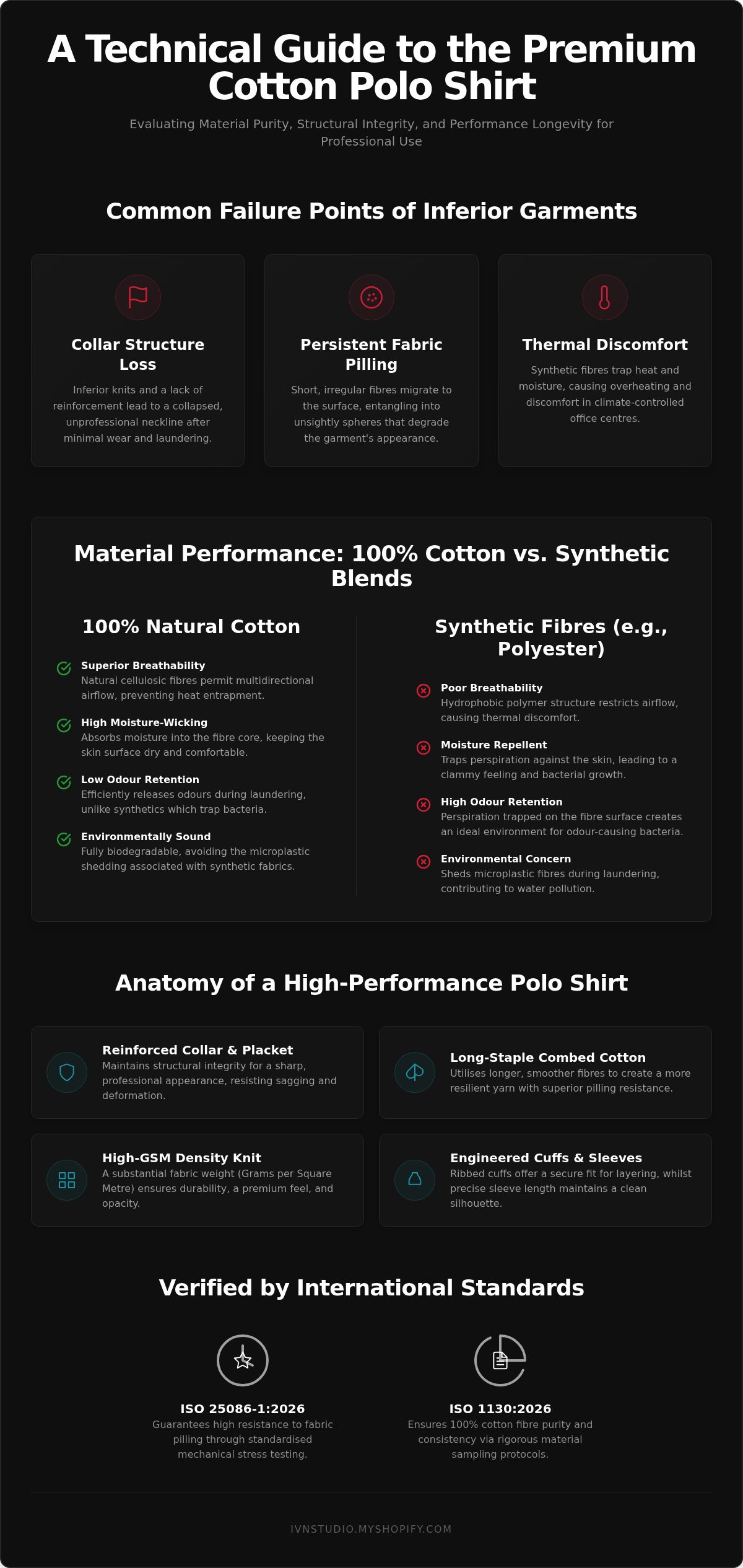
The operational efficiency of a professional smart-casual wardrobe relies fundamentally on the material purity and technical weave engineering of its core components. Selecting a high-quality men's long-sleeved cotton polo shirt requires a departure from subjective aesthetic preferences toward a rigorous evaluation of physical and technical parameters. You likely recognise the recurring failure points of inferior garments, specifically the rapid loss of collar structure, persistent fabric pilling, and the thermal discomfort associated with synthetic fibre overheating in climate-controlled environments.
This technical analysis provides a comprehensive framework for identifying 100% cotton fabrics with optimal GSM density and pilling resistance as defined by ISO 25086-1:2026 standards. We examine the specific material benchmarks necessary for garment longevity and professional utility whilst outlining the procurement standards essential for a reliable supply chain. Our review covers fibre sampling protocols under ISO 1130:2026 and the structural advantages of specific knit configurations to ensure your apparel investment maintains its functional integrity through intensive usage cycles.
Key Takeaways
- Identification of 100% cotton fibre purity as the critical benchmark for thermoregulation and moisture-wicking performance in climate-controlled centres.
- Technical assessment of the men's long-sleeved cotton polo shirt structural design, specifically regarding collar stability and reinforced placket parameters.
- Application of rigorous laundering protocols and thermal regulation standards to ensure fabric preservation and garment longevity.
- Streamlined procurement via Shopify-integrated ordering systems and automated national UK fulfilment logistics for rapid professional utility.
- Integration of high-GSM cotton fabrics into professional wardrobes to achieve a balance between smart-casual aesthetics and functional durability.
Technical Overview: The Men's Long-Sleeved Cotton Polo Shirt
The men's long-sleeved cotton polo shirt represents a critical component in the modern professional's inventory. It serves as a transitional smart-casual asset, bridging the gap between formal button-down shirts and casual knitwear during autumn, winter, and spring cycles. In administrative and corporate environments, this garment provides a structured appearance whilst maintaining the comfort levels required for prolonged desk-based tasks. The 100% cotton fibre purity acts as the primary quality indicator, distinguishing high-performance apparel from low-cost alternatives. Examining the Polo shirt history and design reveals a trajectory from athletic utility to its current status as a versatile wardrobe staple for the efficiency-focused consumer.
Material Composition and Fibre Purity
Technical superiority in textiles is achieved through 100% natural cotton composition. Unlike polyester blends, which often lead to synthetic fibre overheating and skin irritation, pure cotton offers natural hypoallergenic properties. High-grade cotton fibres facilitate moisture transfer and airflow, keeping the wearer comfortable in temperature-controlled office centres. The impact of fibre length on garment surface smoothness is significant. Longer staples produce a more resilient yarn, which directly correlates with reduced pilling and increased garment longevity. Standardised testing under ISO 1130:2026 ensures that fibre sampling meets rigorous quality control benchmarks for consistency and durability.
The Long-Sleeved Silhouette in Modern Menswear
The silhouette of the men's long-sleeved cotton polo shirt is defined by specific cuff and sleeve parameters. Cuff construction typically follows two paths: ribbed specifications for a secure fit or open-hem designs for a streamlined profile. Ribbed cuffs prevent sleeve migration when layered under technical outerwear or blazers. Sleeve length ratios are engineered to ensure the cuff terminates precisely at the wrist bone, allowing for professional layering without excess bulk. This integration with structured tailoring makes the long-sleeved polo an effective alternative to traditional shirts in professional settings. The placket design and collar structure provide the necessary rigidity to maintain a clean neckline throughout the day, avoiding the collapse common in lightweight casual shirts.
Performance Characteristics of 100% Cotton Apparel
The performance profile of a men's long-sleeved cotton polo shirt is dictated by the physical properties of cellulosic fibres. Natural cotton facilitates superior thermoregulation within temperature-controlled professional centres by allowing multidirectional airflow. This breathability prevents the thermal discomfort associated with synthetic polymer heat entrapment. Natural cellulosic fibres possess high moisture-wicking capabilities, absorbing liquid into the fibre core whilst maintaining a dry surface contact against the skin. Tensile strength remains a critical metric; cotton fibres exhibit increased resistance to mechanical wear and tension when moist, ensuring structural integrity during high-frequency usage. Unlike synthetic fabrics, 100% cotton reduces static electricity accumulation. This eliminates the cling and discharge common in dry office environments.
Cotton vs Synthetic Fibres: A Performance Comparison
Breathability indices confirm that natural cotton significantly outperforms polyester and nylon in gas permeability tests. Synthetic fibres are hydrophobic. They repel moisture and trap perspiration against the skin, leading to rapid bacterial growth and odour retention. Natural cotton fibres allow for more efficient laundering and odour release. From an environmental perspective, 100% cotton is fully biodegradable. This avoids the microplastic shedding associated with synthetic laundering cycles. You can review technical material specifications for 100% cotton apparel to ensure compliance with professional standards.
Durability and Pilling Resistance
Fabric pilling is a mechanical failure occurring when short fibres migrate to the surface and entangle into small spheres. This phenomenon is prevalent in low-quality blends where synthetic fibres anchor the cotton pills, preventing them from falling away. Combed cotton manufacturing removes these short, irregular fibres before spinning. The result is a smoother yarn with higher pilling resistance. The structural stability of a men's long-sleeved cotton polo shirt depends on this fibre length uniformity. High-density knits maintain their dimensions after repeated wash cycles. They resist the distortion and torque common in inferior textile constructions. Adherence to ISO 25086-1:2026 snagging resistance standards ensures the fabric surface remains intact under mechanical stress.
Structural Design and Technical Fit Parameters
The structural integrity of a men's long-sleeved cotton polo shirt determines its functional performance in professional environments. Collar stability is achieved through high-density knit techniques or the integration of internal interlining. This ensures the collar maintains a vertical orientation without the requirement for external stiffeners. Placket design involves a choice between two-button and three-button technical aesthetics. A two-button placket offers a streamlined appearance, whilst a three-button configuration provides a deeper opening for enhanced thermal regulation. Shoulder seam reinforcement is critical for shape retention. Taped seams or twin-needle stitching prevent the fabric from stretching under the weight of the sleeves, ensuring the garment maintains its original silhouette through repeated laundering cycles.
Technical fit categories are defined by precise measurements to accommodate different body types. Slim fit specifications feature a tapered waist and narrower armholes for a contoured profile. Regular fit parameters provide a balanced chest-to-waist ratio, facilitating ease of movement. Classic fit measurements offer maximum torso volume for traditional professional utility. These categories allow for precise selection based on individual ergonomic requirements.
Weave Standards: Piqué vs Interlock
The piqué weave utilises a geometric, textured pattern that increases surface area for enhanced breathability. This makes it suitable for active utility in fluctuating office temperatures. Conversely, the interlock weave is a double-knit structure that produces a smooth surface on both sides of the fabric. It offers a heavier weight and a more formal aesthetic compared to standard knits. Selection depends on specific environmental conditions. Piqué is optimal for warmer centres, whilst interlock provides superior insulation during colder seasonal cycles.
Measurement Accuracy for Professional Sizing
Accurate garment dimensions are essential for professional procurement. Chest circumference measurements are taken at the widest point of the torso, whilst torso length is measured from the highest shoulder point to the hem. Sleeve specifications follow the centre-back to cuff protocol, ensuring the men's long-sleeved cotton polo shirt terminates correctly at the wrist bone. Modern manufacturing tolerances are typically maintained within a +/- 1.5 cm range to ensure consistency across production batches. This precision allows for reliable sizing across different colour variants and stock cycles, reducing the need for returns due to fit inconsistencies.
Maintenance Standards and Garment Longevity
Adherence to technical laundering protocols ensures the preservation of 100% cotton fibre integrity. High-frequency maintenance of a men's long-sleeved cotton polo shirt requires strict thermal regulation to prevent mechanical failure. Natural cellulosic fibres are susceptible to thermal shock during high-temperature wash cycles. Excessive heat causes individual fibres to contract and tighten, resulting in irreversible garment shrinkage and structural distortion. Washing at temperatures not exceeding 30 degrees Celsius maintains the original dimensions of the knit whilst reducing energy consumption. Minimising mechanical agitation through the selection of gentle wash cycles prevents surface abrasion. This reduces the risk of pilling and maintains the smooth surface finish required for professional utility.
Evaluating Fabric Weight: The GSM Guide
Grams per Square Metre (GSM) serves as the primary metric for fabric density and weight. Lightweight cotton (120-150 GSM) provides base-layer utility in high-temperature environments but often lacks the opacity required for standalone professional wear. Heavyweight cotton (200+ GSM) offers superior durability and a more structured drape. For a high-performance men's long-sleeved cotton polo shirt, a mid-to-heavyweight range is the optimal benchmark. This density ensures shape retention and resistance to mechanical wear in administrative settings. You can secure 100% cotton apparel that meets these specific GSM requirements for long-term professional use.
Drying techniques directly impact garment longevity. Avoid tumble drying. The high-velocity heat in mechanical dryers causes rapid fibre dehydration and permanent structural damage. Air drying on a flat surface or a wide-shoulder hanger prevents gravity-induced stretching and maintains the shoulder seam alignment discussed in previous sections. For a professional finish, iron the garment whilst slightly damp using the cotton setting. Vertical steaming is an effective alternative for removing creases without direct heat plate contact. This protects the delicate surface fibres from scorching and maintains the fabric's natural lustre.
Colour Retention and Chemical Resistance
Reactive dye processes are essential for dark colour longevity in natural cotton garments. These dyes form a covalent bond with the cellulose molecules, preventing pigment leaching during laundering cycles. UV exposure represents a secondary risk to pigment stability. Direct sunlight degrades the molecular bonds of the dye, leading to premature fading and uneven colour distribution. Detergent selection is a critical technical requirement. Use pH-neutral, liquid detergents specifically formulated for natural fibres. Avoid powders containing optical brighteners or bleaching agents. These chemicals accelerate the breakdown of natural oils in the cotton, leading to fibre brittleness and reduced tensile strength.
Procurement and Order Specifications at Myshop
Procurement of the men's long-sleeved cotton polo shirt at Myshop is conducted through a Shopify-integrated e-commerce platform designed for maximum transactional efficiency. This system ensures total material transparency by providing verified 100% cotton composition data for every garment. Standardised sizing protocols eliminate fit variability. This allows for consistent professional wardrobe organisation across multiple procurement cycles. Clear technical disclosures regarding GSM and weave type facilitate rational decision-making. You'll avoid the procurement risks associated with subjective marketing narratives by focusing on these material-first parameters.
Efficient Online Order Fulfillment
Order processing utilizes fully automated systems to minimise lead times from transaction to dispatch. Real-time stock availability tracking prevents the selection of out-of-stock inventory. Secure transaction protocols ensure data integrity for all retail consumers. Strategic logistics centre positioning facilitates rapid national UK delivery coverage. This infrastructure supports high-frequency procurement requirements. It ensures that professional apparel assets are delivered with precision and speed. The integration of automated logistics ensures that delivery timelines remain consistent regardless of order volume.
Selecting Your Favourite Professional Colour
Colour selection is prioritised for executive and administrative environments where visual consistency is mandatory. Classic navy and charcoal variants provide high-contrast options for formal layering under the structured jackets and technical outerwear discussed in previous sections. Neutral tones facilitate versatile smart-casual organisation. These options allow for seamless integration with existing professional inventories. Every men's long-sleeved cotton polo shirt in the inventory undergoes the reactive dye processes required for long-term pigment stability. This prevents the premature fading common in inferior natural fibre products.
View the Men’s Long-Sleeved Cotton Polo Shirt collection to initiate procurement. Select specific technical parameters and colour variants to complete your professional wardrobe requirements.
Optimising Wardrobe Standards with Technical Precision
Integrating high-performance apparel into a professional smart-casual rotation depends on adhering to the material and structural standards outlined in this analysis. The men's long-sleeved cotton polo shirt serves as a reliable asset when constructed with a 100% cotton material specification; ensuring optimal breathability and pilling resistance. By prioritising technical fit parameters and standardised GSM density, you secure a garment that maintains its structural integrity and colour retention despite high-frequency laundering cycles. These factors collectively reduce the lifecycle cost of your professional inventory whilst maintaining a consistent aesthetic.
Efficient procurement is supported by automated Shopify logistics and comprehensive national UK fulfilment; providing a streamlined path from selection to delivery. Transparency in material disclosure and measurement accuracy allows for a rationalised approach to wardrobe organisation. Purchase the Men's Long-Sleeved Cotton Polo Shirt to upgrade your professional inventory with verified technical standards. Take the next step toward a more functional and durable professional wardrobe today.
Frequently Asked Questions
What is the benefit of a 100% cotton polo shirt over a blend?
100% cotton provides superior thermoregulation and moisture absorption compared to polyester blends. Synthetic fibres often trap heat and odour; whereas natural cellulosic fibres facilitate multidirectional airflow. This prevents the skin irritation and overheating common with synthetic polymer fabrics in climate-controlled professional environments.
How do I prevent my long-sleeved polo from shrinking?
Prevent shrinkage by washing the garment at temperatures not exceeding 30 degrees Celsius and avoiding tumble dryers. High-velocity heat causes natural cotton fibres to contract permanently. Flat air-drying or using wide-shoulder hangers maintains structural dimensions and prevents gravity-induced stretching of the sleeves.
Is a long-sleeved polo shirt appropriate for a business casual dress code?
A men's long-sleeved cotton polo shirt is a standard asset for business casual environments. It provides a structured collar and professional silhouette whilst offering more comfort than a traditional button-down shirt. Integration with blazers or tailored trousers ensures a balanced professional appearance suitable for administrative and corporate settings.
What does GSM mean in relation to cotton shirts?
GSM stands for Grams per Square Metre; a metric used to define fabric density and weight. Higher GSM values indicate a heavier, more durable fabric with better shape retention. Professional-grade polo shirts typically utilise a mid-to-heavyweight range to ensure opacity and resistance to mechanical wear during intensive usage cycles.
How should I measure myself for a men's long-sleeved polo?
Measure your chest circumference at the widest point and your sleeve length from the centre-back neck to the wrist bone. Use a flexible tape measure to ensure precision within the standard +/- 1.5 cm manufacturing tolerance. Comparing these data points to specific technical fit categories ensures a reliable selection across slim, regular, or classic measurements.
Can cotton polo shirts be ironed without damaging the fabric?
Cotton polo shirts can be safely ironed using the specific cotton heat setting whilst the fabric is slightly damp. Direct heat plate contact removes creases effectively without compromising fibre integrity. Alternatively, vertical steaming provides a non-contact method to maintain a professional finish and protect delicate surface fibres from potential scorching.
What is the difference between piqué and jersey cotton weaves?
Piqué weave features a textured, geometric pattern that increases surface area for enhanced breathability in fluctuating temperatures. Jersey weave is a flat-knit structure that offers a smoother, more lightweight feel. Selection depends on specific utility requirements; piqué provides more structure for professional settings, whilst jersey offers a softer drape for casual use.
How long does shipping take for UK national orders?
UK national orders are processed through automated logistics systems to ensure rapid fulfilment. National delivery coverage typically facilitates arrival within standard commercial timelines after dispatch from the logistics centre. Real-time tracking through the Shopify-integrated platform allows you to monitor the transit status of your apparel procurement efficiently.